

ESPRESSO - Kayon Mountain Farm - Shakiso - Organic Washed
ESPRESSO - Kayon Mountain Farm - Shakiso - Organic Washed
Couldn't load pickup availability
The Cup
Jammy nectarine, fresh pineapple, and toffee flavours with juicy acidity and clean fruit-like sweetness.
About Kayon Mountain Farm
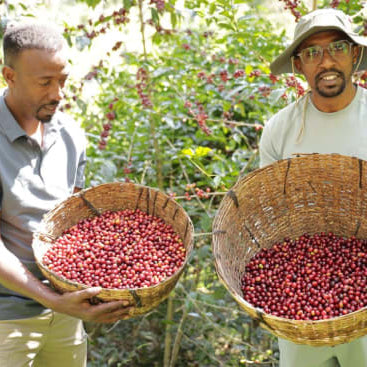
The Kayon Mountain Coffee Farm is 500 hectares with about 300 hectares planted in coffee and has been owned and operated by Ismael Hassen Aredo and his family since 2012. It is located 510 kilometers south of Addis Ababa, and the property crosses the border of two villages—Taro and Sewana—located in the Oromia region, in the Guji zone of the Shakiso district of Ethiopia.
Ismael oversees a staff of 25 permanent full-time and 300 seasonal employees, and the farm management offers free transportation services as well as financial support for building schools and administration buildings for the community. The farm competes with a nearby mining village for seasonal workers, so Ismael and his family tend to pay higher wages to their pickers in order to incentivize them returning year after year.
Kayon Mountain farm has a nursery on-site and utilizes shade (acacia and other indigenous trees) to protect the coffee as well as for creating compost to fertilize naturally. Ismael is meticulous about not only the structure and management of the farm itself but also the harvesting and processing. Both Natural and Washed lots are produced on the property.
Coffee Details
Farm: Kayon Mountain Farm
Process: Washed
Variety: Heirloom Ethiopian Varieties
Elevation: 1900–2200 MASL
Region: Guji
Country: Ethiopia
Harvest: November - January
Grade: Grade 2
Certification: Organic
Washed Process
The process of producing Washed coffees in Ethiopia will vary slightly from washing station to washing station, but generally speaking the coffee is picked ripe and depulped the same day. There is usually a fermentation period of 8–12 hours in open-air tanks, then washed in water channels to remove the mucilage. The coffee seeds are spread on raised beds to dry for 5–15 days, depending on the weather.
Heirloom Ethiopian Varieties
Although this offering is not traceable to a single variety, it is comprised of native heirloom varieties cultivated in Ethiopia.
Guji Region
Guji is a beautifully forested area in southern Ethiopia. Before the early 2000's, this region was considered part of Sidama, but has since become its own region. The people of Guji grow coffee gardens at very high altitudes in the rich red soil of the highlands, setting this coffee's profile apart from neighboring regions. These smallholders deliver their coffee to washing stations to be sorted and processed together, developing flavors of fruits, deep chocolate, and light florals.
About Ethiopian Coffee
Among coffee-producing countries, Ethiopia holds near-legendary status not only because it's the "birthplace" of Arabica coffee, but also because it is simply unlike every other place in the coffee world. Unlike the vast majority of coffee-growing countries, the plant was not introduced as a cash crop through colonization. Instead, growing, processing, and drinking coffee is part of the everyday way of life, and has been for centuries since the trees were discovered growing wild in forests and eventually cultivated for household use and commercial sale.
The majority of Ethiopia's farmers are smallholders and sustenance farmers, with less than 1 hectare of land apiece. In many cases, it is almost more accurate to describe these farms as "coffee gardens" as the trees do sometimes grow in more of a garden or forest environment than what we imagine fields of farmland to look like.
Share