


FILTER - Gara Agena - Special Prep - Washed Grade 1 Sidama
FILTER - Gara Agena - Special Prep - Washed Grade 1 Sidama
Couldn't load pickup availability
The Cup
Intense cooked blackberry with jammy peach and mild cola and cacao flavours. Juicy malic acidity and delicate fruit-like sweetness.
About Gara Agena Washing Station
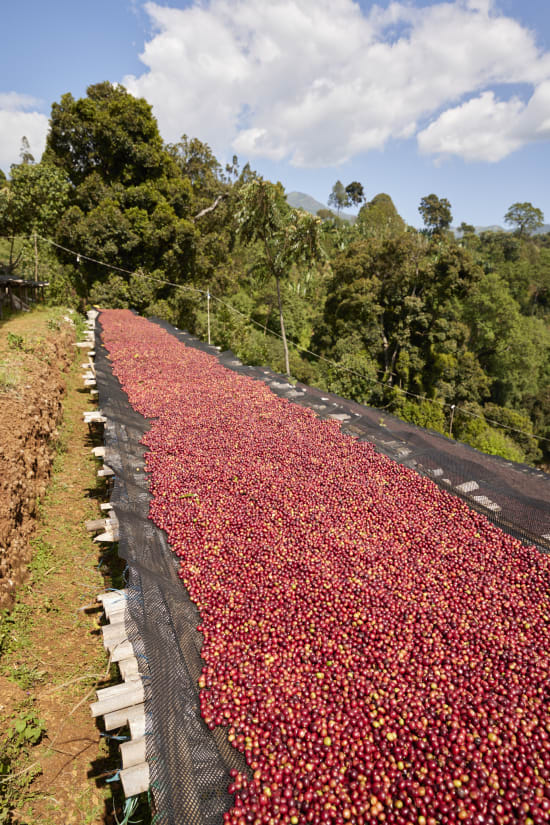
The Gara Agena Washing Station is located near the Geta River in the Bura district of Sidama. Cherries are picked ripe and immersed in water to remove floaters, then soaked for 8 hours. Once the soaking is complete, the cherries are depulped and fermented for precisely 36 hours. The parchment coffee is then dried on raised beds placed in a well-ventilated, shaded area for a 21-day drying period.
Coffee Details
Farm: Gara Agena
Process: Washed Special Prep
Variety: Heirloom Ethiopian Varieties
Elevation: 2235-2350 MASL
Region: Sidama
Country: Ethiopia
Harvest: November - January
Grade: Grade 1
Washed Special Prep Process
With the special prep (what producers generally call "Premium" in Ethiopia), cherries are collected from a limited number of small-holder farmers. 90% of the cherries are perfectly picked at the right red color, 5% semi-red, and 5% overripe. All of it is processed and stored separately from other lots. They generally produce a very small number of bags in this way every year. In most instances, cherries used to produce these lots are collected from a day lot (picked in one day).
The coffee is picked ripe and depulped the same day. There is usually a fermentation period of 8–12 hours in open-air tanks, then washed in water channels to remove the mucilage. The coffee seeds are spread on raised beds to dry for 5–15 days, depending on the weather.
Heirloom Ethiopian Varieties
Although this offering is not traceable to a single variety, it is comprised of native heirloom varieties cultivated in Ethiopia.
Sidama Region
The Sidama region is known for producing the most coffee at the highest grades in Ethiopia, and the geography explains why. This region spreads across fertile highlands, where half of the land is cultivated. The surrounding rivers and lakes along with the very high elevation result in cool weather and fertile soil. These factors, in combination with over 100 inches of rainfall per year, cause the coffee to ripen slower than in any other region in Ethiopia. There are over 50 cooperatives and 200 washing stations throughout Sidama.
About Ethiopian Coffee
Among coffee-producing countries, Ethiopia holds near-legendary status not only because it's the "birthplace" of Arabica coffee, but also because it is simply unlike every other place in the coffee world. Unlike the vast majority of coffee-growing countries, the plant was not introduced as a cash crop through colonization. Instead, growing, processing, and drinking coffee is part of the everyday way of life, and has been for centuries since the trees were discovered growing wild in forests and eventually cultivated for household use and commercial sale.
The majority of Ethiopia's farmers are smallholders and sustenance farmers, with less than 1 hectare of land apiece. In many cases, it is almost more accurate to describe these farms as "coffee gardens" as the trees do sometimes grow in more of a garden or forest environment than what we imagine fields of farmland to look like.
Share